Demo · Machito
Examples
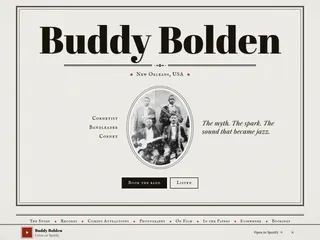
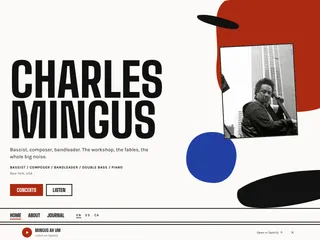
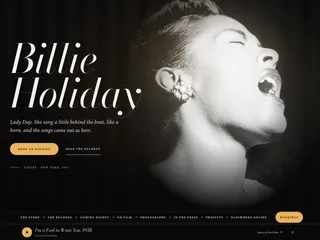
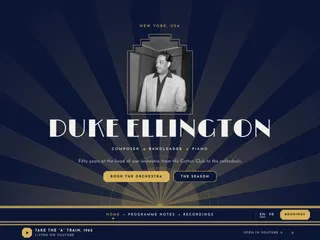
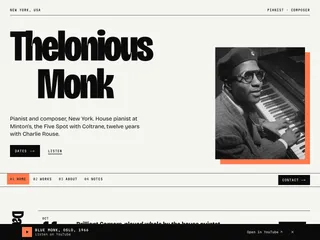
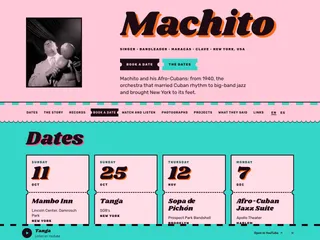
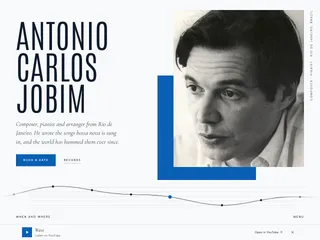
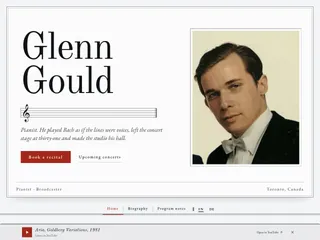
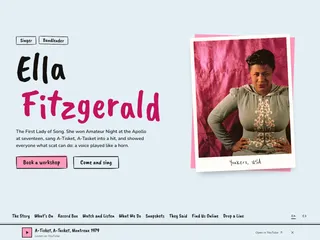
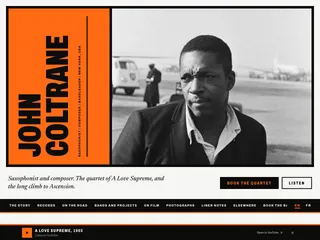
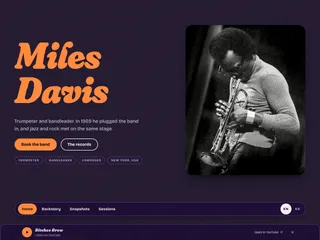
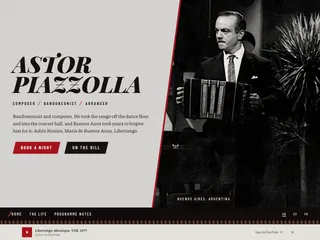
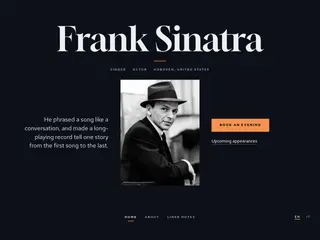
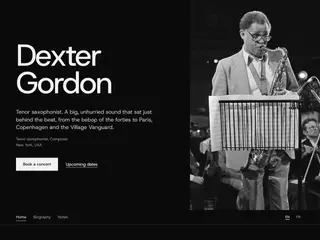
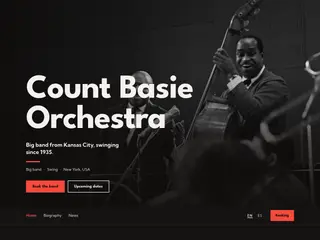
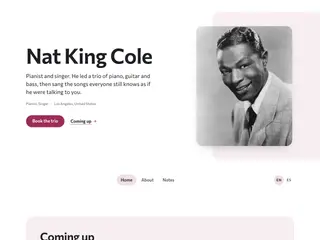
Each theme has a site dedicated to the musician it is named after.
Pages
What a visitor can open on this site.
Theme
The world the site is drawn in. The content stays the same.
Day or night
The ground under everything: it changes the site the most.
Style
A colour and a typography made for each other.
Colour
In place of the style's accent, in every theme. Deeper by day, softer by night.
The theme's own
Hero
How the page opens.
Machito
- Singer
- Bandleader
- Maracas
- Clave
Machito and his Afro-Cubans: from 1940, the orchestra that married Cuban rhythm to big-band jazz and brought New York to its feet.
New York, USA
The Life
Machito (Frank Grillo, 1909-1984) was a singer and maracas player who grew up in Havana, among the soneros of the 1920s, and came to New York in 1937.
In 1940 he founded Machito and his Afro-Cubans with his brother-in-law Mario Bauzá, a trumpeter from Chick Webb's band, as musical director. Bauzá wrote Tanga in 1943, and with it the orchestra laid Cuban rhythm, the clave, the congas and the bongó, under big-band jazz harmony: Afro-Cuban jazz. His sister Graciela joined as the band's singer.
They recorded with Charlie Parker and Dizzy Gillespie, played Chico O'Farrill's Afro-Cuban Jazz Suite, and through the 1950s ruled the Palladium Ballroom on Broadway, the home of the mambo, alongside Tito Puente and Tito Rodríguez. He won a Grammy in 1983 and was still on the road when he died in London, a year later.
The Records
On the Bill
5NOVThursday
Tanga
SOB’sNew York
Screening Room
Press Cuttings
Notes from the Mambo Inn: The Story of Mario Bauzá, PBS, 1998
This was a new concept in interpreting Cuban music with as much (harmonic) richness as possible. It made every other band that came after, followers.
Chico O’Farrill To Be or Not to Bop, 1979
Living and playing with Mario, I found out that despite the language differences, Afro-Americans and Cubans were not destined to be total strangers, musically.
Dizzy Gillespie quoted in Paul Austerlitz, Jazz Consciousness, 2005
The marriage of Cuban music with jazz was not a conventional union. It was a marriage of love.
Machito
Productions
Photographs
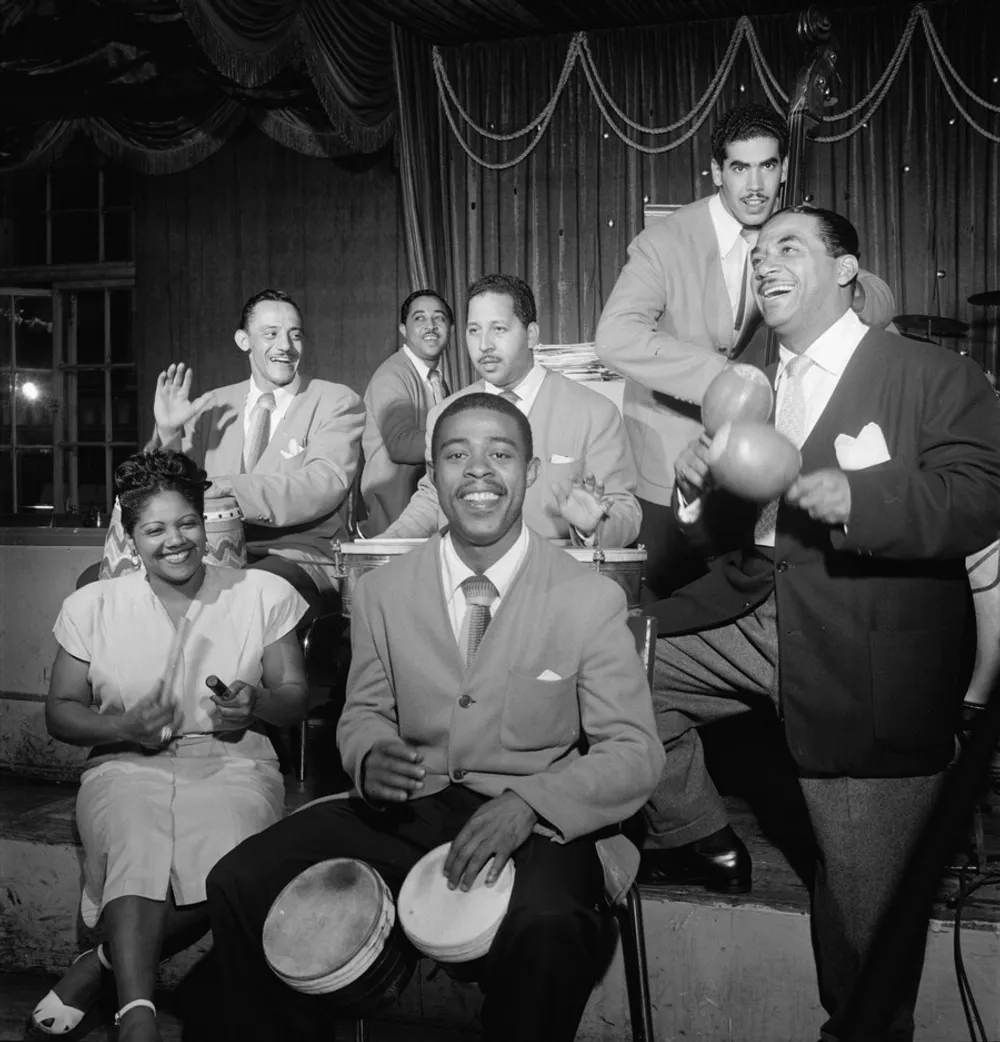
Machito and Graciela at the microphone, Glen Island Casino, New York, 1947. William P. Gottlieb, Library of Congress Graciela, José Mangual on bongó and the band around Machito, Glen Island Casino, 1947. William P. Gottlieb The rhythm section on bongó, maracas and conga, 1947. William P. Gottlieb Machito on maracas, Graciela on claves, 1947. William P. Gottlieb, Library of Congress José Mangual on bongó, Glen Island Casino, 1947. William P. Gottlieb Havana, the Avenida del Puerto, on a postcard of the 1940s