Demo · John Coltrane
Examples
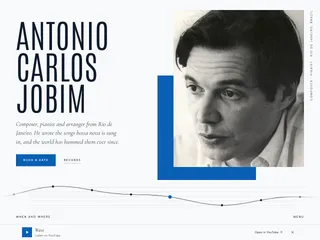
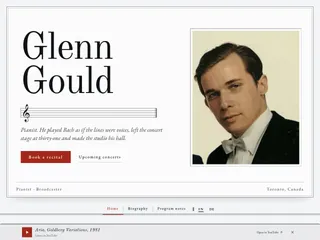
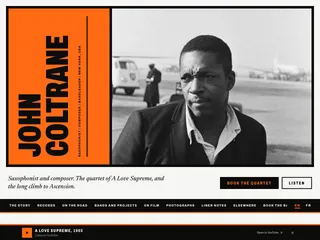
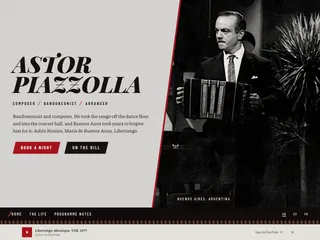
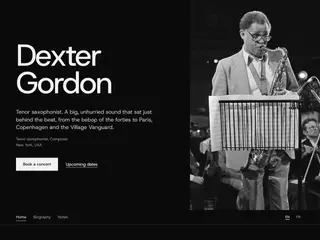
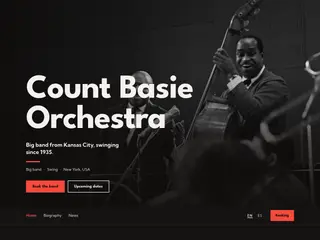
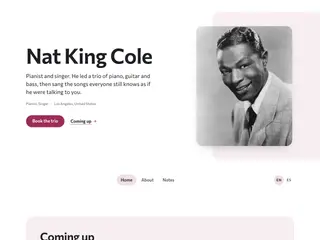
Each theme has a site dedicated to the musician it is named after.
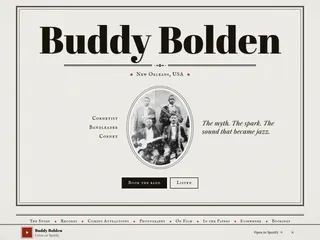
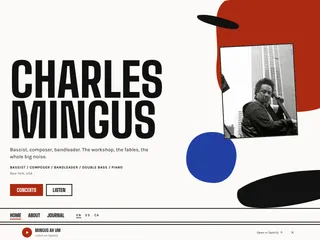

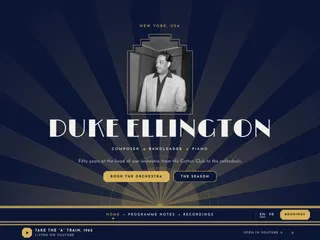
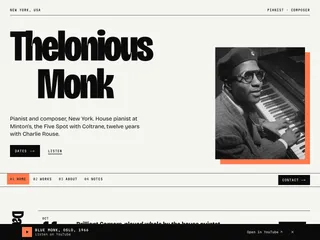




Pages
What a visitor can open on this site.
Theme
The world the site is drawn in. The content stays the same.
Day or night
The ground under everything: it changes the site the most.
Style
A colour and a typography made for each other.
Colour
In place of the style's accent, in every theme. Deeper by day, softer by night.
The theme's own
Hero
How the page opens.



John Coltrane
SaxophonistComposerBandleaderTenor saxophoneSoprano saxophoneNew York, USA
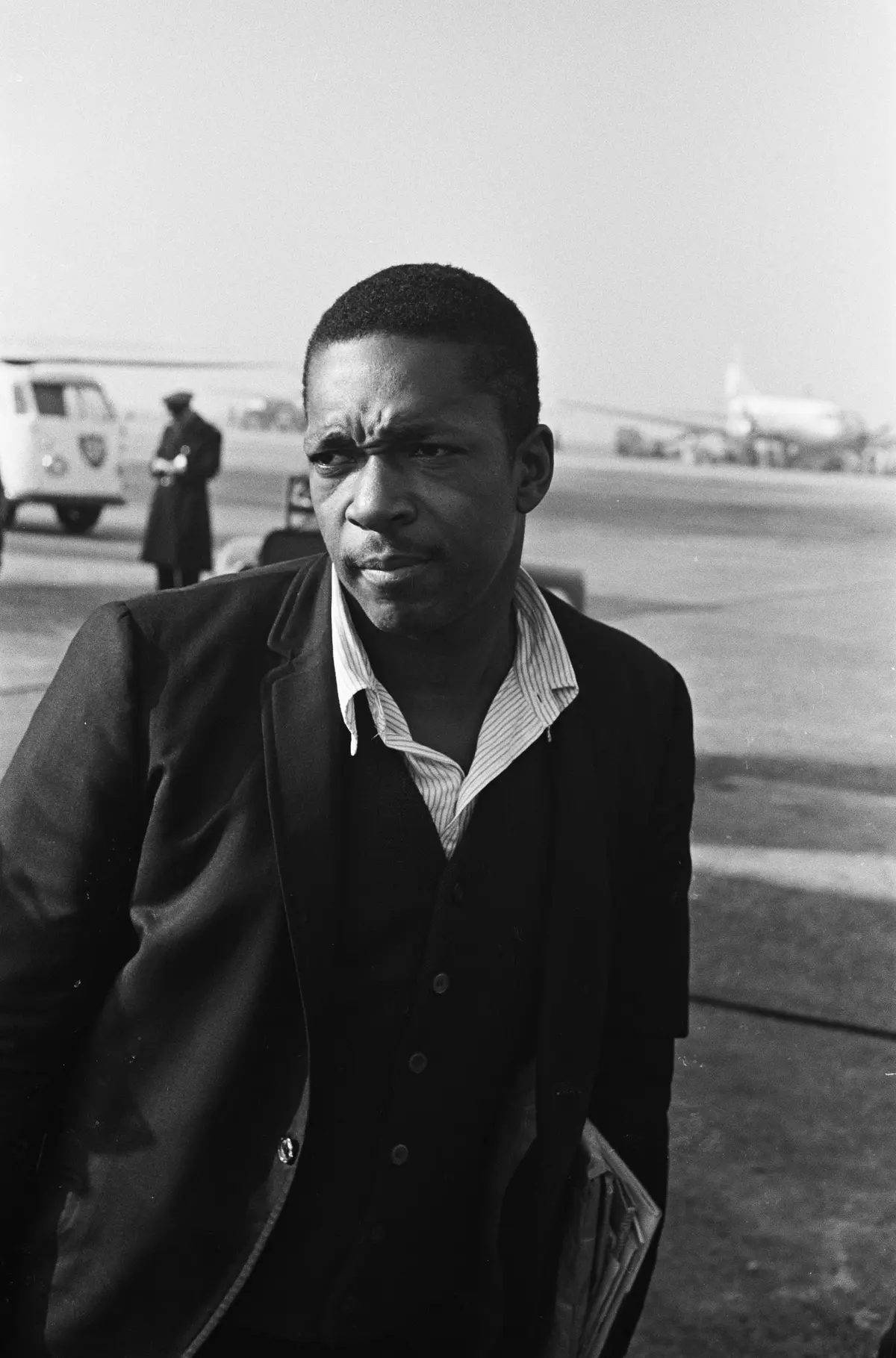
Saxophonist and composer. The quartet of A Love Supreme, and the long climb to Ascension.
About
John Coltrane (1926–1967) was a saxophonist and composer. He was born in Hamlet, North Carolina, took up the saxophone in Philadelphia, and served in the Navy in Hawaii in 1945 and 1946 before coming home to play in the city’s bands.
He joined Miles Davis’s quintet in 1955 and left it in April 1960. In 1957, after a spiritual awakening that ended his heroin addiction, he played the Five Spot with Thelonious Monk and recorded Blue Train. Giant Steps followed in 1959, and on My Favorite Things he took up the soprano saxophone.
His own quartet, with McCoy Tyner, Jimmy Garrison and Elvin Jones, played from the early 1960s, and from 1961 on Impulse! Records. He wrote A Love Supreme in the summer of 1964 at his house in Dix Hills, on Long Island, and recorded it in one session in December: four parts, Acknowledgement, Resolution, Pursuance and Psalm.
In June 1965 he recorded Ascension with ten other players. That July the quartet played the festival at Antibes and the Salle Pleyel in Paris, and at Antibes performed A Love Supreme in full; a recording of that night survives. He died of liver cancer in 1967, at forty.
This is a demo site, a tribute built to show what a musician’s page on TJP can hold. Its dates are the demo’s own.
Records
Appearances
Film
Press
“My goal is to live the truly religious life and express it in my music. If you live it, when you play there’s no problem because the music is just part of the whole thing. To be a musician is really something. It goes very, very deep. My music is the spiritual expression of what I am — my faith, my knowledge, my being.”
“John [Coltrane] was like a visitor to this planet. He came in peace and he left in peace; but during his time here, he kept trying to reach new levels of awareness, of peace, of spirituality.”
“There was Coltrane with the lights behind him, beatified. He held out his arms and took me in and I wept like a child.”
“In short, [Coltrane’s] tone is beautiful because it is functional. In other words, it is always involved in saying something.”
“The main thing a musician would like to do is to give a picture to the listener of the many wonderful things he knows of and senses in the universe.”