Billy Strayhorn
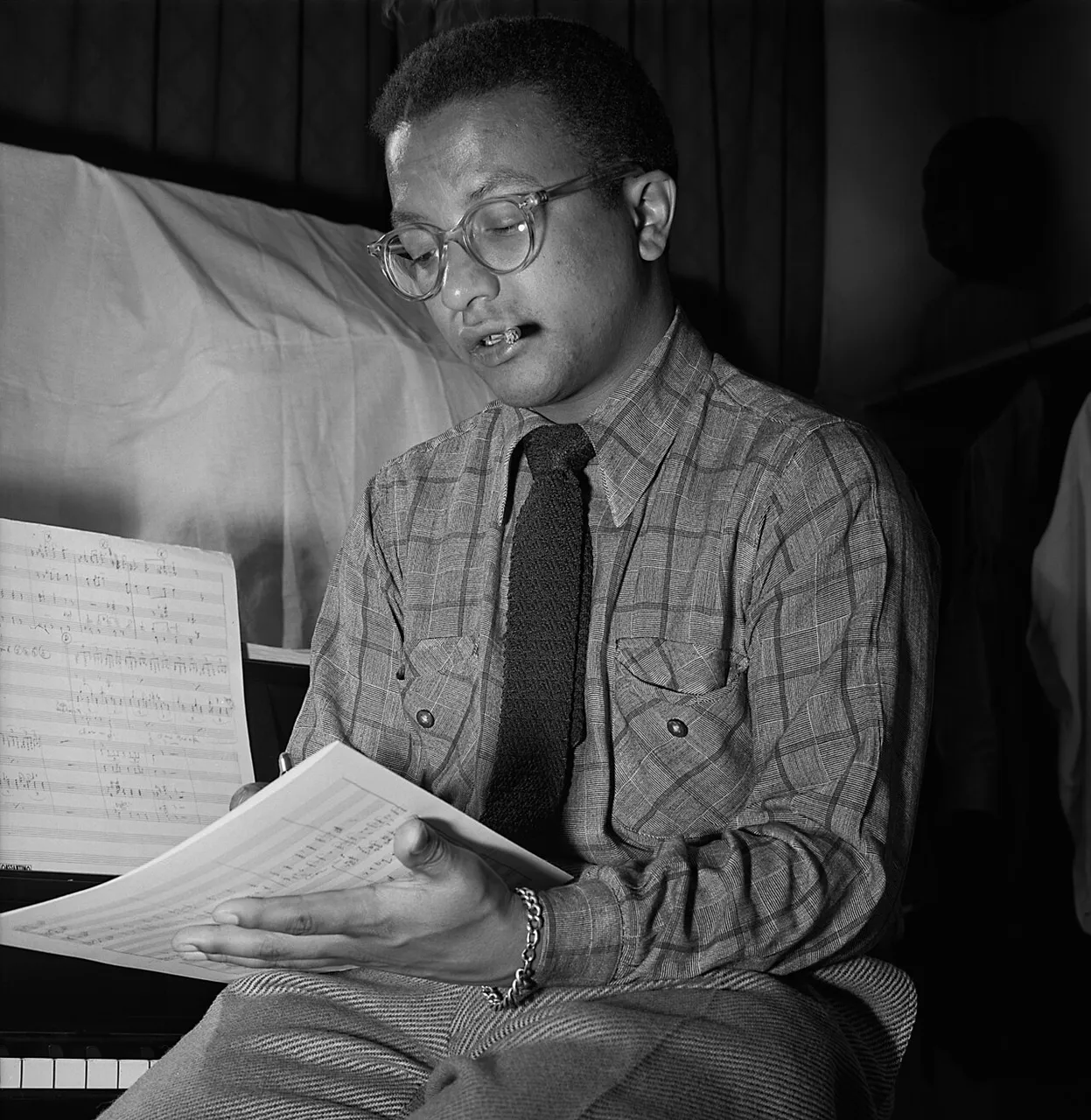
Composer and arranger, 1939 to 1967. Take the “A” Train, Chelsea Bridge and Lush Life are his.
Read more (Billy Strayhorn)Each theme has a site dedicated to the musician it is named after.
What a visitor can open on this site.
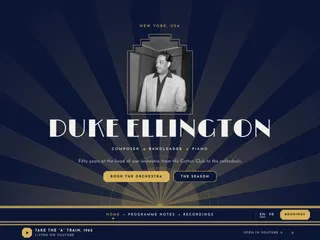
The world the site is drawn in. The content stays the same.
The ground under everything: it changes the site the most.
A colour and a typography made for each other.
In place of the style's accent, in every theme. Deeper by day, softer by night.
The theme's own
How the page opens.
Edward Kennedy “Duke” Ellington (1899-1974) was born in Washington, D.C., and learned his trade at the piano in its ragtime cafés. He came to New York in 1923 and, from 1927 to 1931, led the house band of the Cotton Club in Harlem, broadcast across America night after night.
He wrote for the players in front of him, not for a section: the growl of a trumpet, the silk of Johnny Hodges’s alto, Harry Carney’s baritone at the bottom of every chord. In 1939 Billy Strayhorn joined him, and for almost thirty years the two wrote as one; Strayhorn’s Take the “A” Train became the band’s signature.
At Carnegie Hall in 1943 he played Black, Brown and Beige, a history of Black America in music. At Newport in 1956 Paul Gonsalves blew twenty-seven choruses of Diminuendo and Crescendo in Blue and the crowd rose to its feet. Then came the suites, from Such Sweet Thunder to the Far East Suite, and from 1965 the Sacred Concerts, played in cathedrals.
He left more than a thousand compositions, and called his band his instrument. “There are simply two kinds of music,” he wrote in 1962, “good music and the other kind.”
Composer and arranger, 1939 to 1967. Take the “A” Train, Chelsea Bridge and Lush Life are his.
Read more (Billy Strayhorn)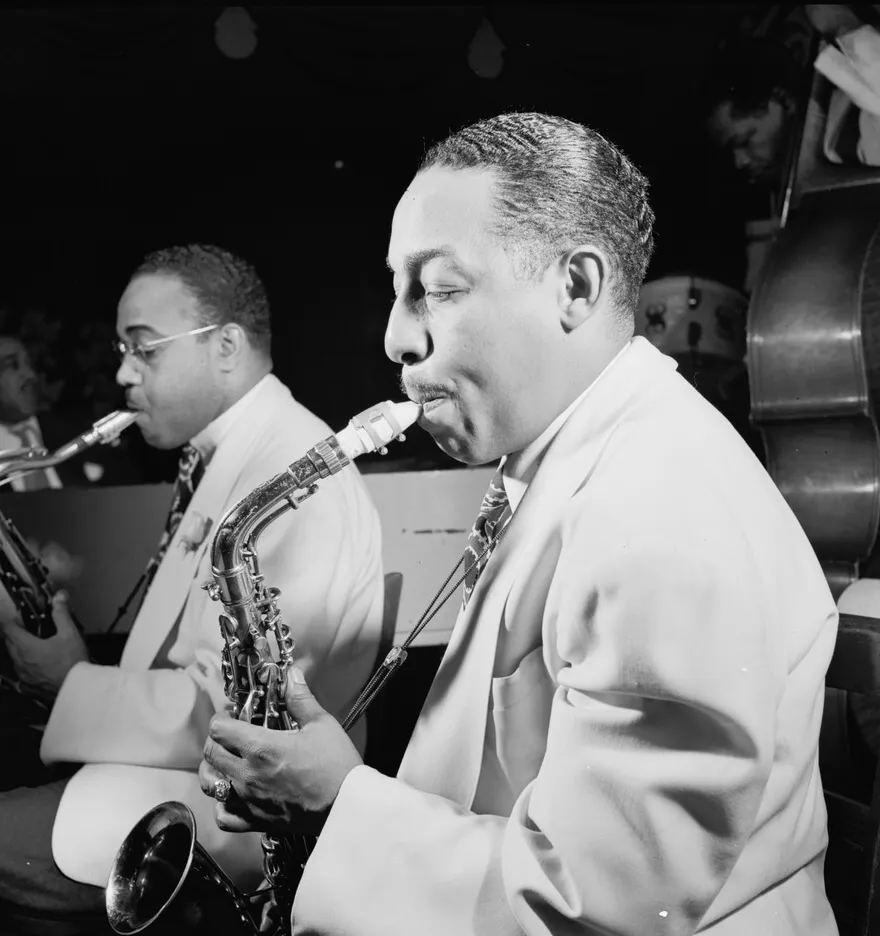
Alto saxophone, 1928 to 1970. He left to lead his own band from 1951 to 1955, then came back to the same chair.
Read more (Johnny Hodges)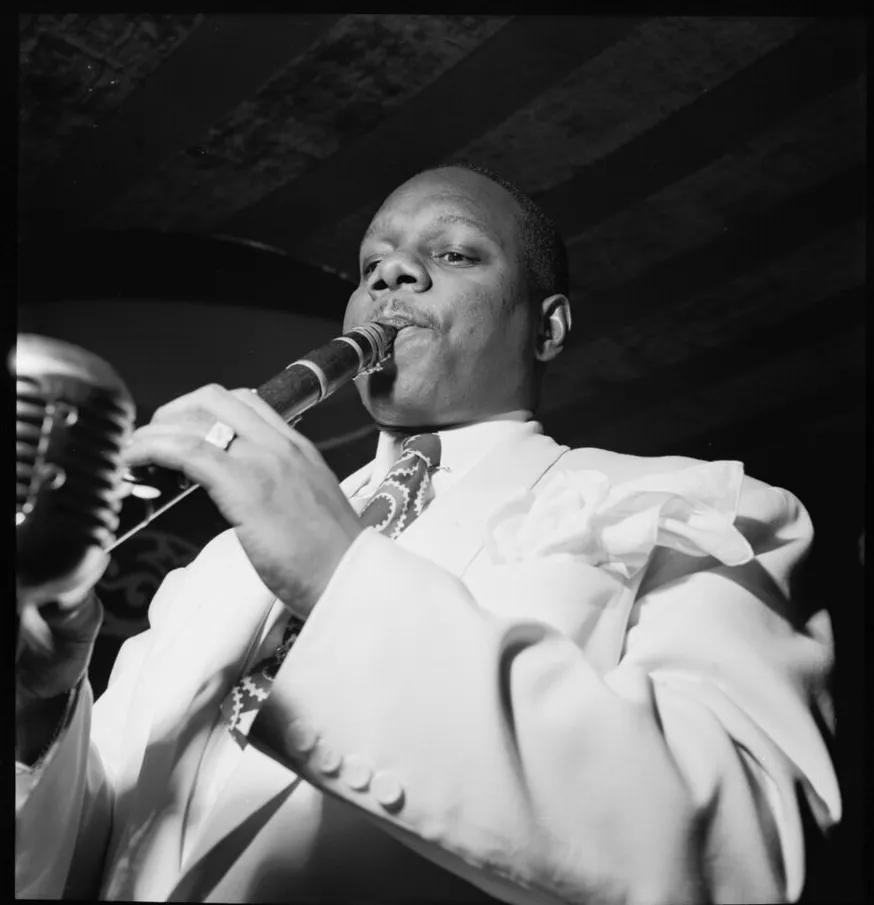
Baritone saxophone, 1927 to 1974. He joined at seventeen, in Boston, and never played in another band.
Read more (Harry Carney)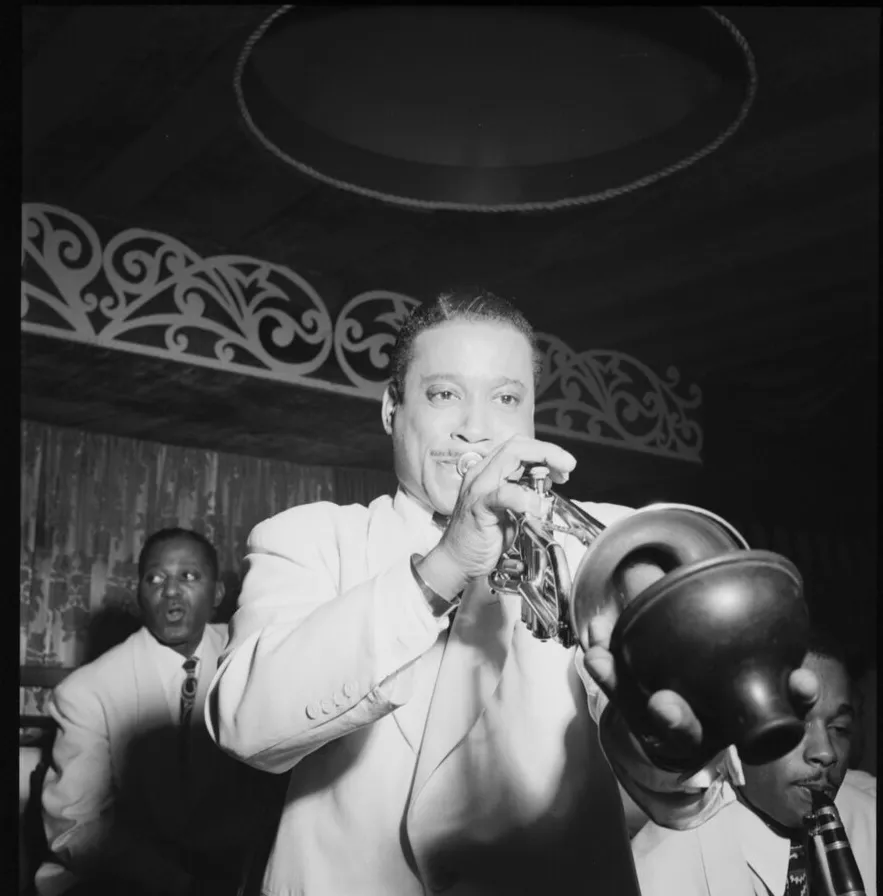
Trumpet, violin and voice, 1940 to 1963. The only violin soloist the orchestra ever had.
Read more (Ray Nance)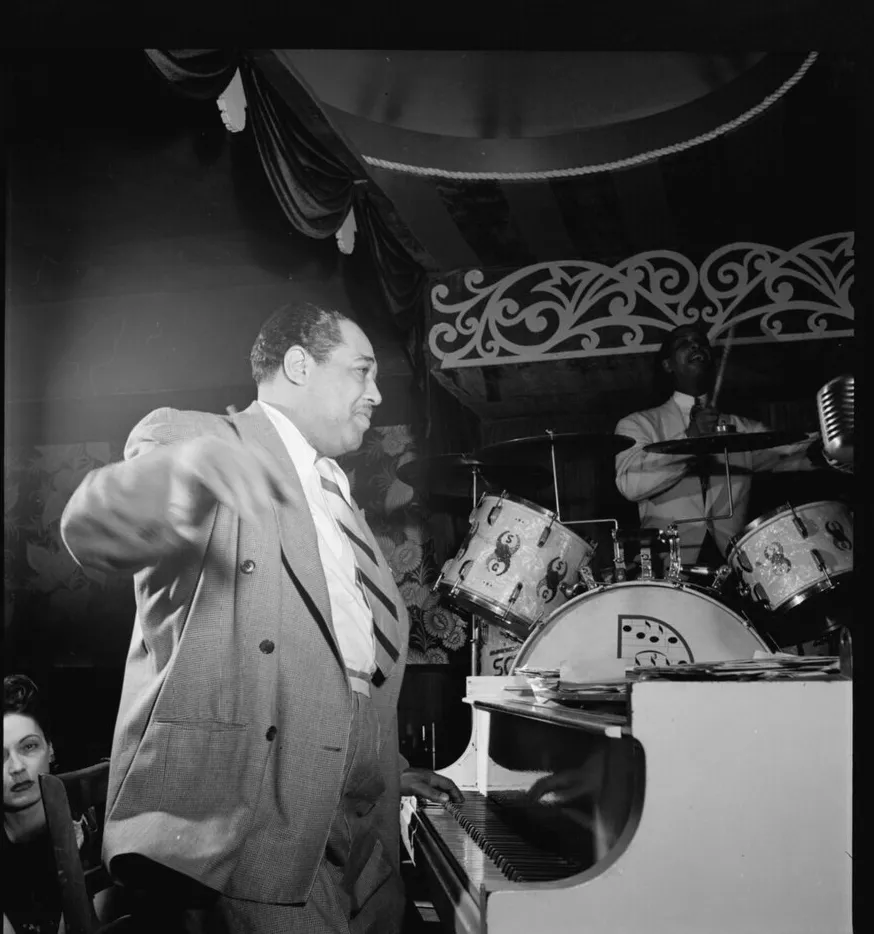
Drums, 1923 to 1951. He came up from Washington with him: the band’s first drummer, behind a kit built like a stage set.
Read more (Sonny Greer)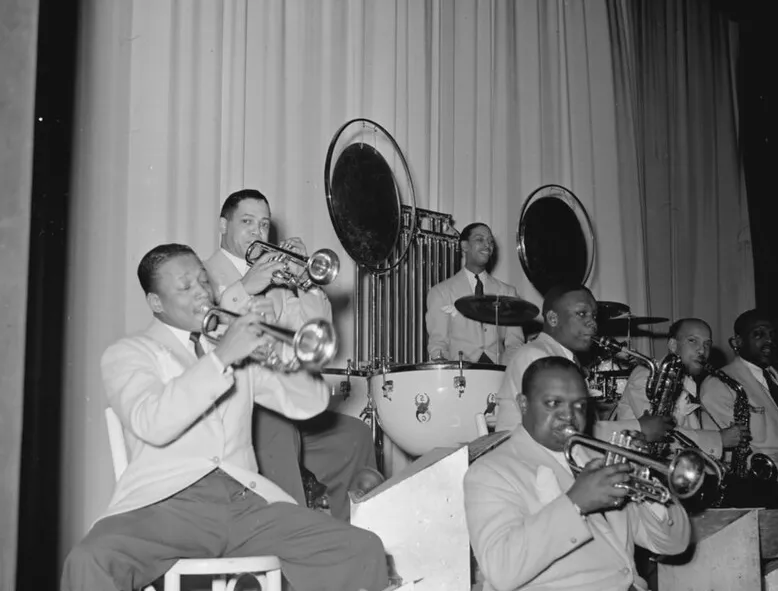
Clarinet, tenor, alto, cornet and trumpet, 1940 to 1942. The band of the early forties; he wrote for each of them by name.
Read more (Bigard, Webster, Hardwick, Stewart, Jones)