Demo · Buddy Bolden
Examples
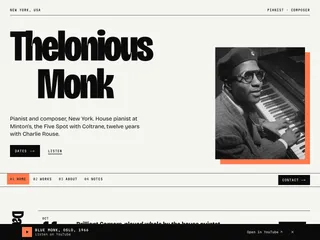
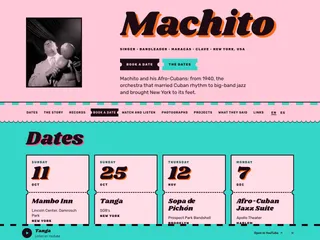
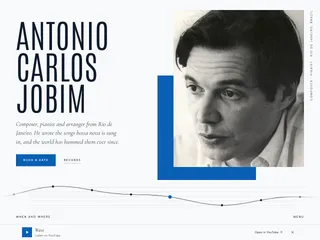
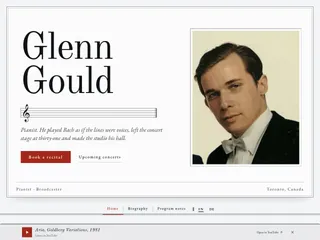
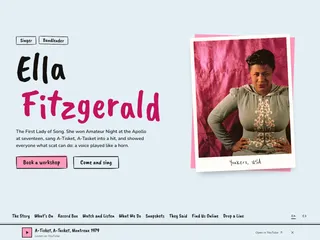
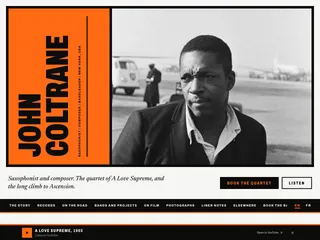
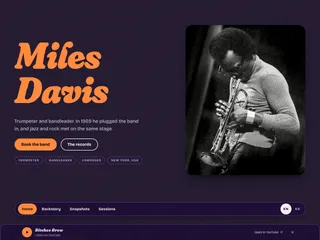
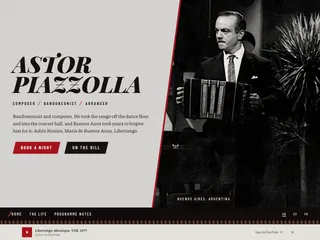
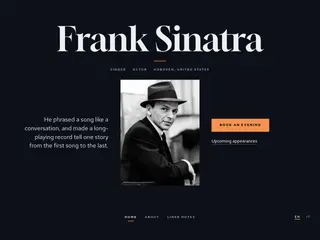
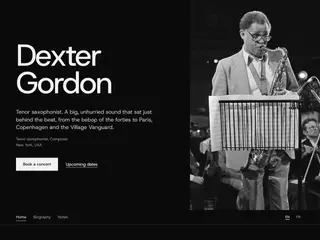
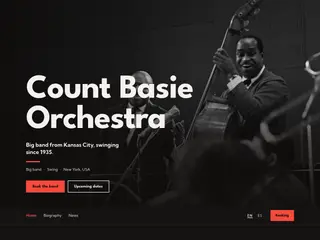
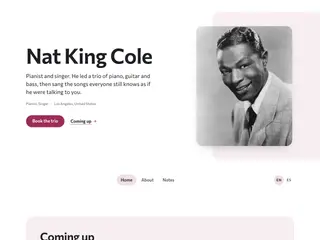
Each theme has a site dedicated to the musician it is named after.
Pages
What a visitor can open on this site.
Theme
The world the site is drawn in. The content stays the same.
Day or night
The ground under everything: it changes the site the most.
Style
A colour and a typography made for each other.
Colour
In place of the style's accent, in every theme. Deeper by day, softer by night.
The theme's own
Hero
How the page opens.
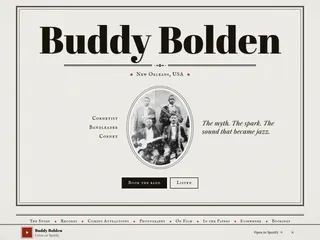
Buddy Bolden
- Cornetist
- Bandleader
The myth. The spark. The sound that became jazz.
New Orleans, USA
The Life
Charles Joseph "Buddy" Bolden (1877-1931) is often credited as the first great voice of jazz: a cornetist whose sound helped turn ragtime, blues and brass-band traditions into something unmistakably new.
No confirmed recordings of Bolden survive. What remains is a story carried in New Orleans memory: a bandleader with a huge tone, a fierce rhythmic feel, and a gift for improvisation that made crowds move. Musicians spoke of his horn as a beacon, a call that travelled through warm night air and pulled people toward the dance halls.
Bolden's era was the city's crucible: parades and picnics, saloons and social clubs, hymn cadences and street beats, all colliding into a new language.
This is a demo site, a tribute built to show what a musician's page on TJP can hold. Its records and dates are the demo's own.
The Records
On the Bill
5NOVThursday
Dance at Union Sons Hall
Union Sons HallNew Orleans
20DECSunday
Storyville listening night
New Orleans Jazz Museum
Screening Room
Press Cuttings
Mister Jelly Roll, Alan Lomax, 1950
Buddy Bolden was the most powerful trumpet player I've ever heard or ever was known.
Jelly Roll Morton New Orleans oral history
Bolden caused whole stampedes with that horn. People would leave their homes and follow the sound.
As told in many jazz histories New Orleans legend
On a clear night, you could hear his cornet from across the river.
Often repeated in jazz writing
Photographs
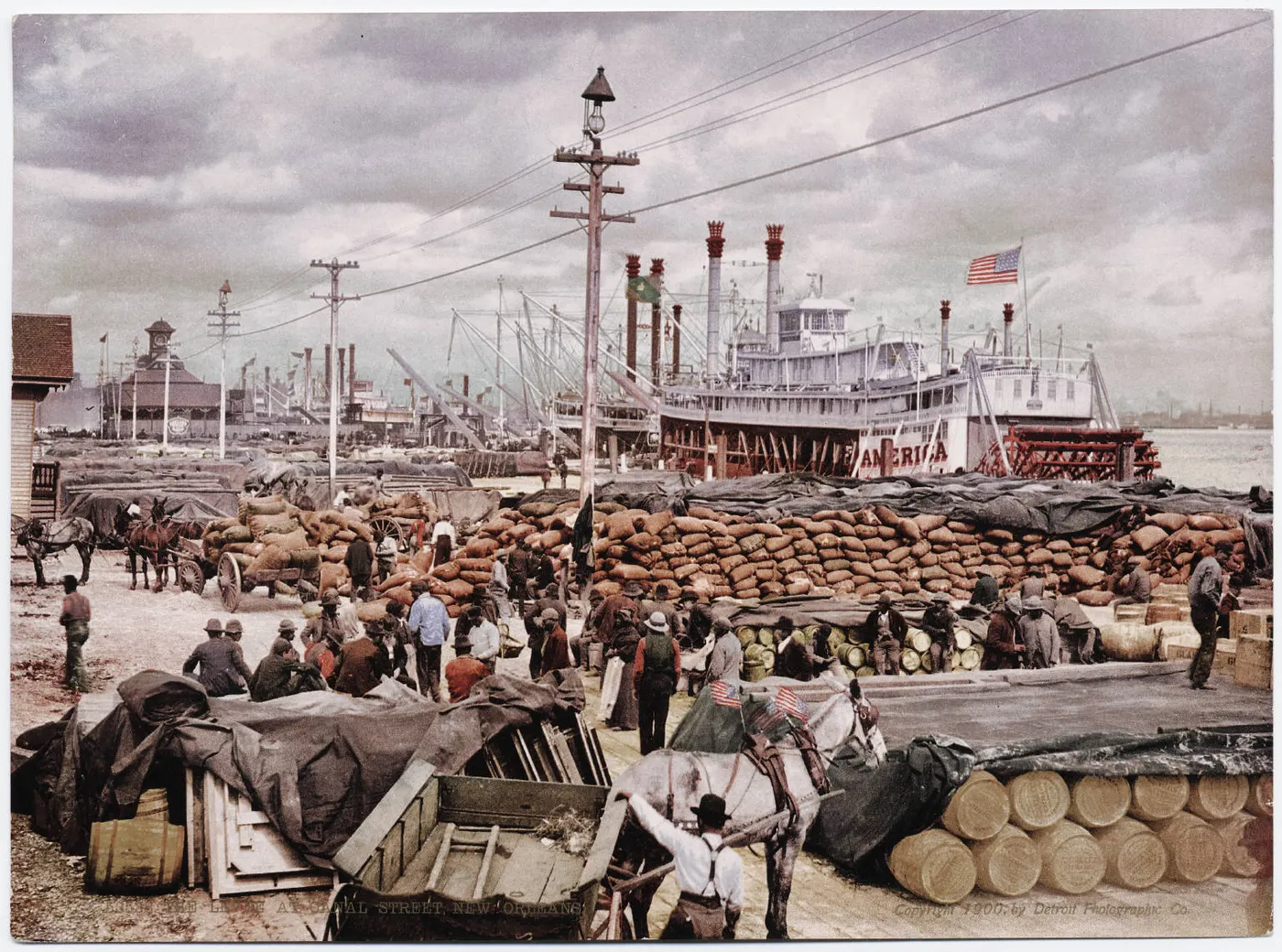
Buddy Bolden's band, New Orleans, around 1905 The levee at New Orleans, 1900 The Superior Orchestra, with Bunk Johnson, 1910 Camp Street from Canal Street, around 1905 The new skating rink at Lincoln Park, in the paper, 1906 A grand picnic at Lincoln and Johnson Parks, May 1904