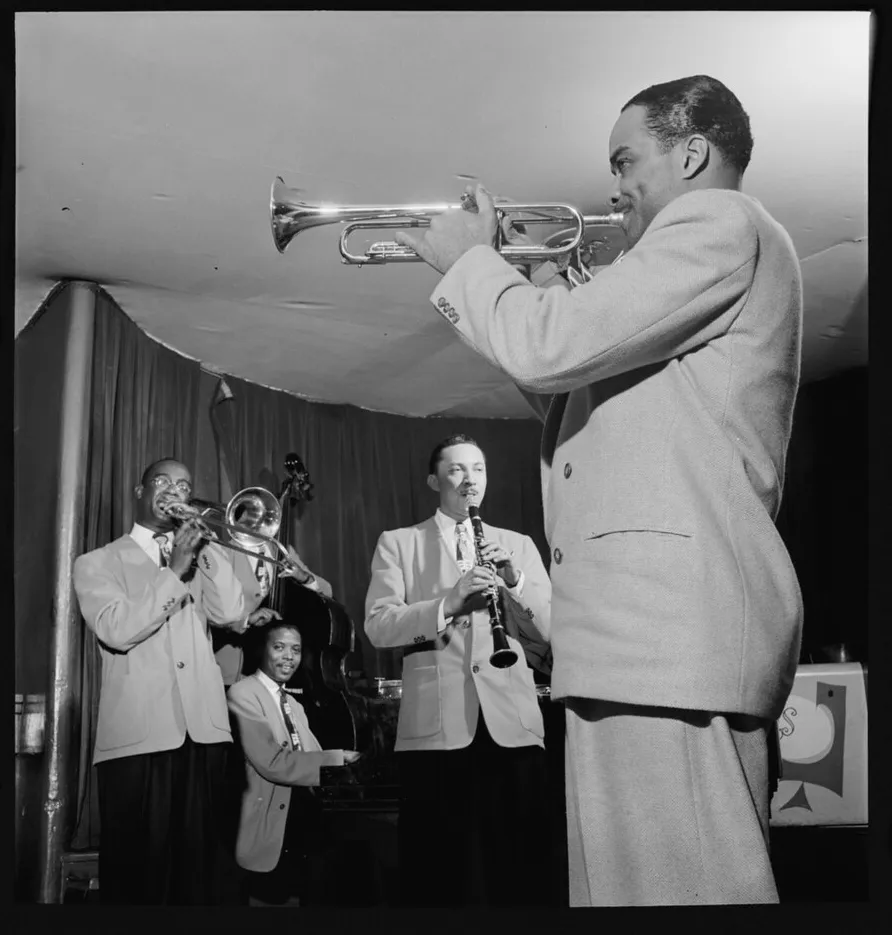
Café Society, 1939
The Greenwich Village club that seated Black and white customers alike. She sang there from 1939 and ended her sets with Strange Fruit.
Read moreEach theme has a site dedicated to the musician it is named after.
What a visitor can open on this site.
The world the site is drawn in. The content stays the same.
The ground under everything: it changes the site the most.
A colour and a typography made for each other.
In place of the style's accent, in every theme. Deeper by day, softer by night.
The theme's own
How the page opens.
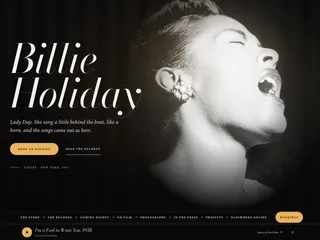
Billie Holiday
1939
Lady Day. She sang a little behind the beat, like a horn, and the songs came out as hers.
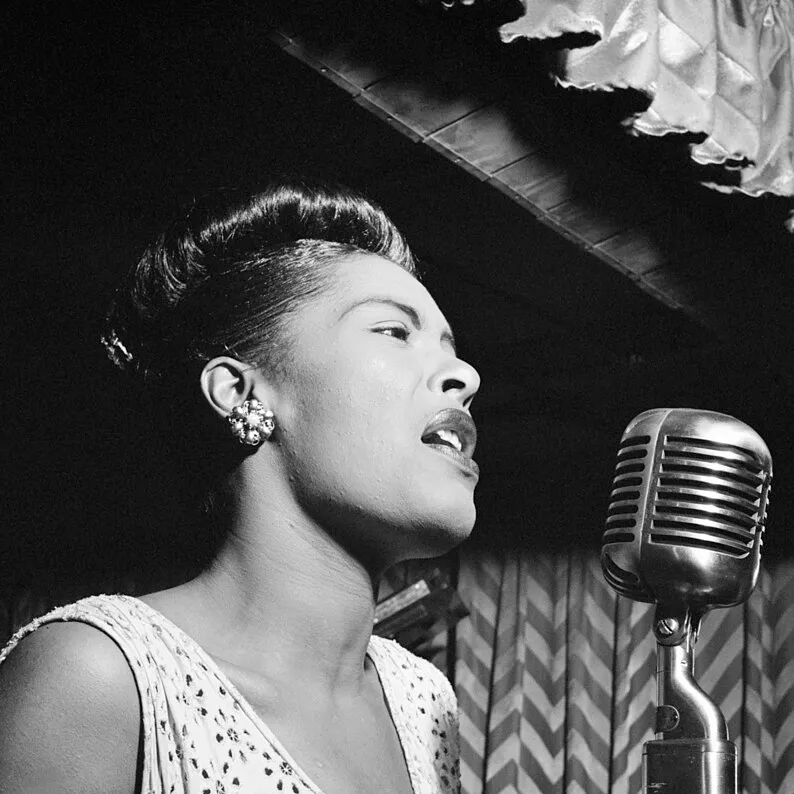
Billie Holiday (1915-1959) was born Eleanora Fagan and grew up in Baltimore. She came to New York as a girl, sang for tips in the clubs of Harlem, and was heard there by the producer John Hammond, who recorded her with Benny Goodman in 1933.
With the pianist Teddy Wilson and the saxophonist Lester Young she made the small-group records of the 1930s that singers still learn from; Young named her Lady Day, and she named him Pres. She sang with Count Basie and Artie Shaw, and in 1939, at Café Society in Greenwich Village, she first sang Strange Fruit.
She phrased like a horn player and changed the melody when it suited the words. Her autobiography, Lady Sings the Blues, came out in 1956; Lady in Satin, recorded with strings, in 1958. She died in New York the next year, at forty-four.
OCT22Thursday
NOV8Sunday
NOV23Monday
Minton's PlayhouseNew York
Lady Day is unquestionably the most important influence on American popular singing in the last twenty years.
Billie Holiday was a poet. She gave you back your experience.
Something was still there, that something that distinguishes an artist from a performer: the revealing of the self.
The Greenwich Village club that seated Black and white customers alike. She sang there from 1939 and ended her sets with Strange Fruit.
Read more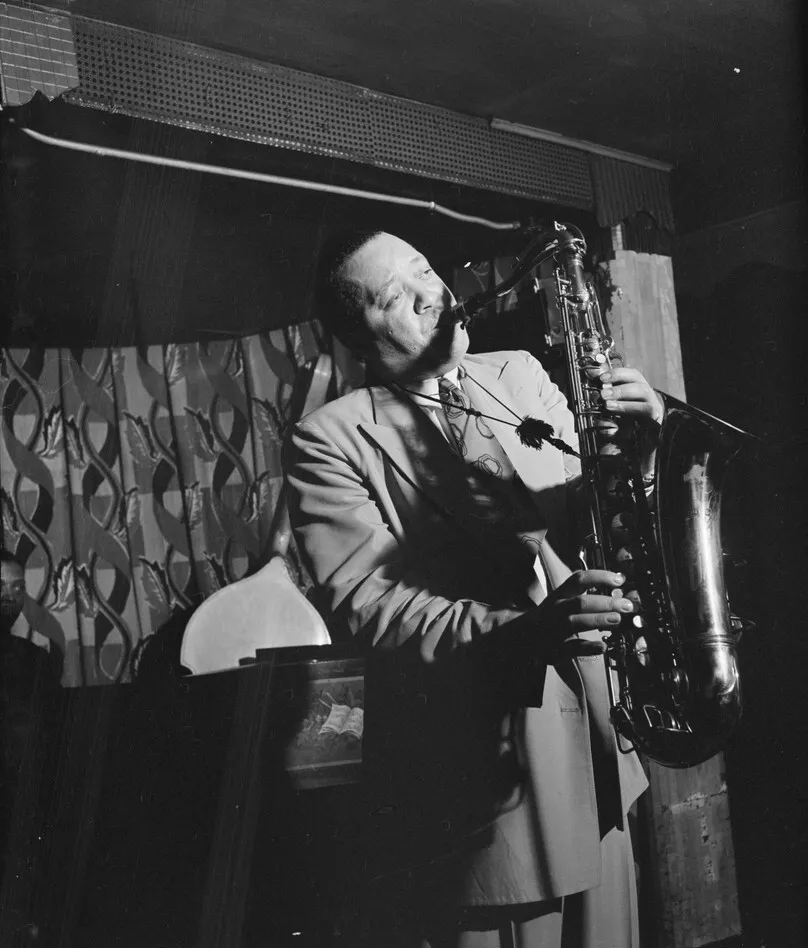
The small-band sides she made with Lester Young and Teddy Wilson between 1937 and 1941.
Read more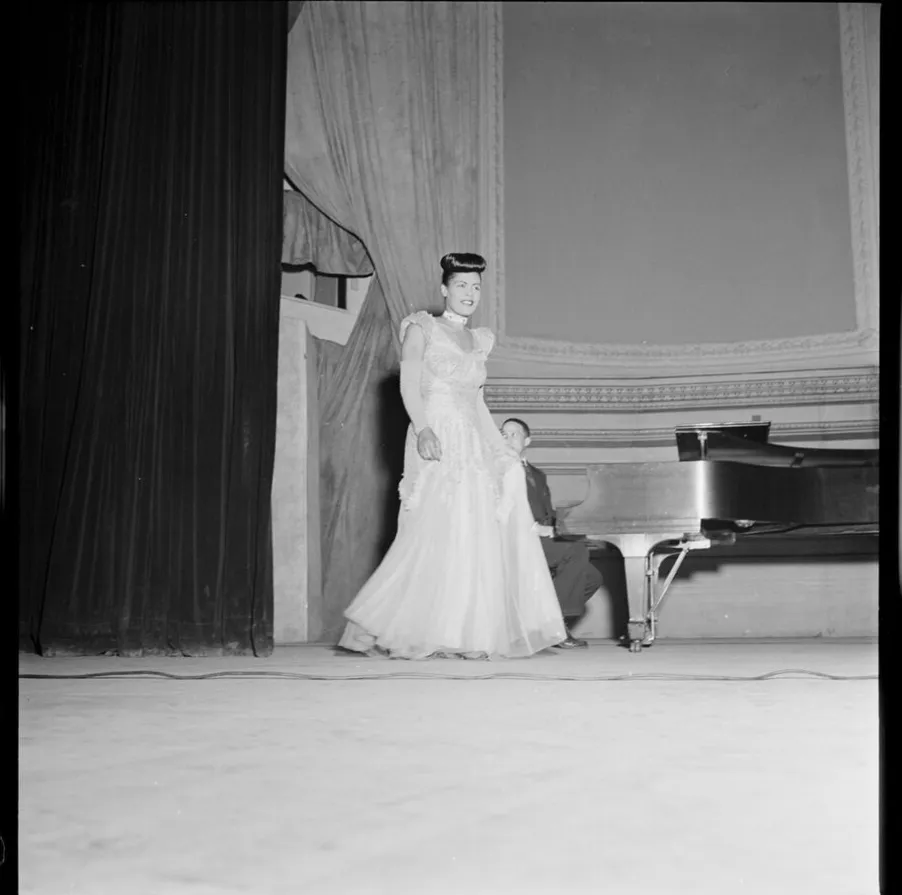
She sold it out in 1948, and again in November 1956, when passages of her autobiography were read between the songs; the second night was released as The Essential Billie Holiday.
Read more